Published: 6 July 2026
Insurance Market Update - Commercial

Commercial New Zealand
Insurance Market Update

A competitive market entering a more selective phase
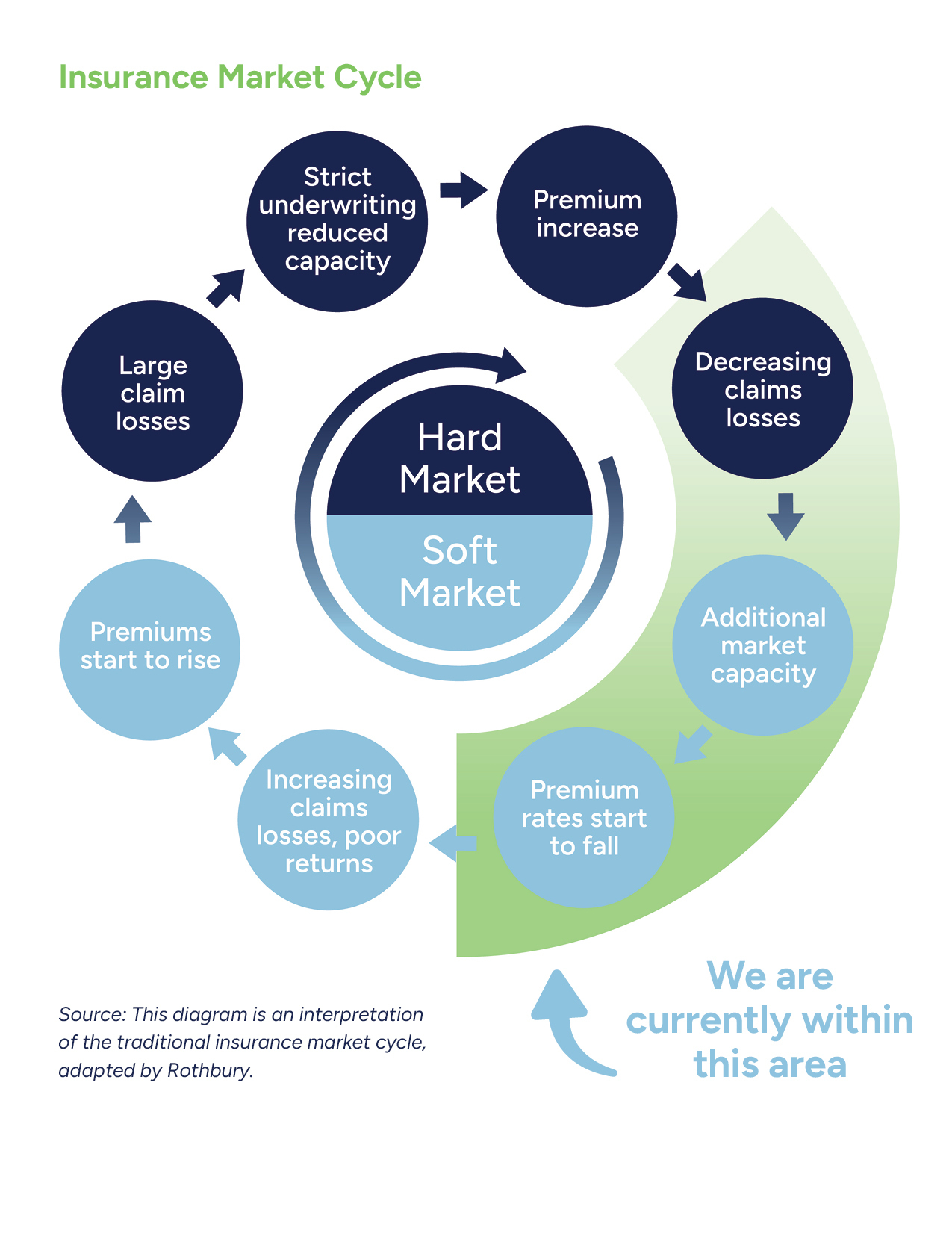
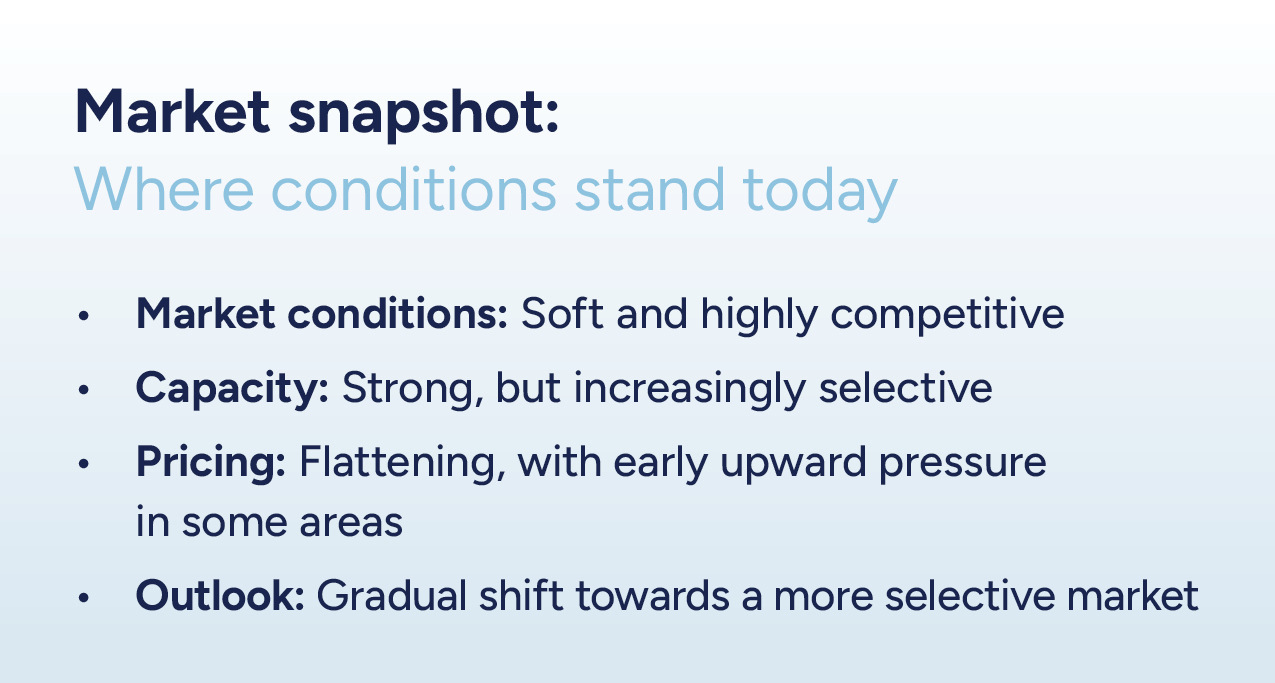
The New Zealand commercial insurance market remains soft and highly competitive, supported by strong insurer capital and ongoing capacity.

However, a shift is underway, with the pace of premium reductions seen through 2025 now slowing and insurers becoming more selective in the risks they support.
While conditions remain favourable overall, increasing weather-related claims activity is placing pressure on insurer profitability and highlighting a growing disconnect between pricing and underlying risk.
These signals suggest the market may be approaching a turning point, although regional experiences continue to vary.
Capacity remains available, but the environment is becoming more volatile and increasingly risk-driven. Underwriting scrutiny is increasing, and the gap between well-managed and more challenged risks continues to widen — with stronger risks still attracting competition, while those with repeated claims or high hazard exposure are seeing tighter terms.
What’s driving the market
The current environment reflects a mix of ongoing competitive conditions and emerging structural pressures.
On one hand, strong insurer capital, continued availability of capacity (including offshore), and relatively benign non-weather claims experience are supporting competition.
On the other, weather volatility, claims inflation driven by materials and labour shortages, and global economic uncertainty — including oil price volatility and supply chain disruption — are increasing uncertainty in claim costs and business operations.
Together, these forces are shaping both insurer appetite and client buying behaviour.

Insurer appetite and capacity
Capacity remains available, but it is no longer uniform. Outcomes increasingly hinge on the quality, transparency, and defensibility of the risk presented, with insurers showing greater discipline in how and where they deploy capital.
Appetite remains strong for well-managed, lower-risk clients — particularly well-maintained commercial property, diversified businesses with strong risk-management practices, modern construction standards, and lower-hazard locations.
In contrast, challenges are increasing for:
- Flood-prone or coastal areas
- Properties with repeated claims
- High-value or complex risks without strong controls
For example, businesses with ongoing flood exposure or repeated losses are increasingly seeing fewer quotes, higher deductibles, or tighter conditions at renewal.
These conditions are driving more detailed underwriting requirements, including requests for independent risk surveys and engineering reports, reduced line sizes, and in some cases, declinatures in higher-risk areas.
Already evident in many 2026 renewals, these trends are likely to become more widespread through 2027 as insurers continue aligning capacity with underlying risk.
Rate movement and coverage trends
Pricing trends are flattening as insurers apply greater selectivity, with early signs of upward pressure emerging in some areas.
- Property: Stable to small reductions for good risks, but flattening overall
- Liability & Financial lines: Competitive, but with tighter underwriting and risk selection
- Cyber: Pricing easing in some areas, but with stricter controls, underwriting scrutiny, and exclusions
- Motor: Increasing cost pressure driven by repair inflation, theft, and longer repair times
Across the market, insurers are:
- Increasing deductibles
- Tightening natural hazard wordings and sub-limits
- Placing greater emphasis on ensuring sums insured are accurate and fit for purpose
These measures help manage exposure to evolving risks while encouraging stronger risk management practices.
External cost pressures
Premium stability does not translate to cost stability.
While premiums may be flat or increasing modestly through 2026, total insurance cost is increasingly being influenced by factors beyond insurer pricing.
As signalled in the 2025 Market Update, key developments include FENZ levy changes effective from 1 July 2026, which will impact many commercial policies across property and motor classes.

At the same time, changes to the Resource Management Act mean fines for non-compliance can no longer be insured, increasing potential exposure for businesses.
There is also growing focus on climate risk disclosure and resilience, requiring greater consideration of factors such as flood exposure, coastal risk, and long-term adaptation.
As a result, clients may see increases in total cost even where base premium rates remain stable, alongside more complex policy structures and disclosure requirements.
Emerging risks shaping today’s market
Risk exposure is evolving — driven by climate, technology, and operational pressures.
Severe weather is escalating in both frequency and impact, driving claims volatility and raising important questions around long-term insurability in higher-risk areas. While the effects of events such as Cyclone Gabrielle (2023) are still being seen, more recent events continue to reinforce this trend.
Fire risk is also evolving, particularly with the increased use of lithium batteries. Incidents involving battery storage and charging systems are becoming more common and are contributing to higher severity fire claims.

Alongside this, cyber threats, supply chain disruption, and business interruption exposures remain key concerns — with increased ransomware activity and disruption-related losses continuing to impact New Zealand businesses.
Adoption of AI is accelerating and introducing new operational, privacy, legal, reputational, and governance risks. Insurers are monitoring these developments closely and assessing the implications across products such as Cyber, Professional Indemnity, Directors & Officers, and Liability.
Making the most of today’s market
Opportunity still exists, but outcomes depend more on risk quality than ever before.
To make the most of current conditions, businesses should focus on:
- Keeping sums insured accurate and up to date
- Investing in practical risk mitigation (e.g. flood protection, maintenance, cyber controls)
- Regularly reviewing programme structure (limits, deductibles, cover types)
These steps help manage cost volatility and position businesses to secure favourable terms in a more selective market.
While the market remains favourable overall, particularly for well-managed businesses, insurers are applying greater discipline and selectivity in how they allocate capacity.

The value of your Rothbury broker
As the market becomes more selective, broker support is increasingly critical.
Rothbury adds value by positioning risks effectively, negotiating terms, and providing strong claims advocacy — particularly following major weather events.
We also help clients navigate regulatory and market change, identify coverage gaps, and optimise programme structure.
For larger organisations, this can extend to more advanced solutions, including first loss and aggregate structures, or alternative risk transfer approaches where appropriate.
Most importantly, we help clients move from being a buyer of insurance to a seller of risk — positioning their business as a well-managed and desirable risk to insurers and driving favourable terms in a more selective market.
This report is intended for general informational purposes only and should not be relied upon as a substitute for legal, financial, or insurance advice.
Download the full PDF report